
Ajay Boga
MA Graphic Arts, 2022
India
With its blend of art, design, architecture and its creativity-centric culture, Bristol was perfect for me. ”
I’ve been an artist ever since my childhood. My way of learning about the world was very much done through my observations and creative activities like drawing. I went into architecture for my undergrad, where I placed a lot of focus on the presentation and communication of relevant concepts. I began to understand the importance of communication, and most of my work focused on storytelling through the objects and spaces I was dealing with, consistently using drawing and animation as tools to accomplish this. By the time I graduated, I’d become more and more certain that art—specifically graphic art—was what I really wanted to do. Coming from a family of doctors and engineers, I needed to do some convincing to help them accept that this was the direction I wanted to take my future studies, but fortunately they were aware of my passions and very supportive of me pursuing them.
My family continued their supportive attitude for me when I informed them that I’d like to study in the UK. The subjects that I’d been studying until then had a Western influence rooted in Indian context.While culturally I was shaped by India, in terms of higher education I was accustomed to the Western style of learning. My curiosity towards learning—specifically the arts, design and culture—added to my family’s understanding of why going abroad for my master’s was a fitting choice.
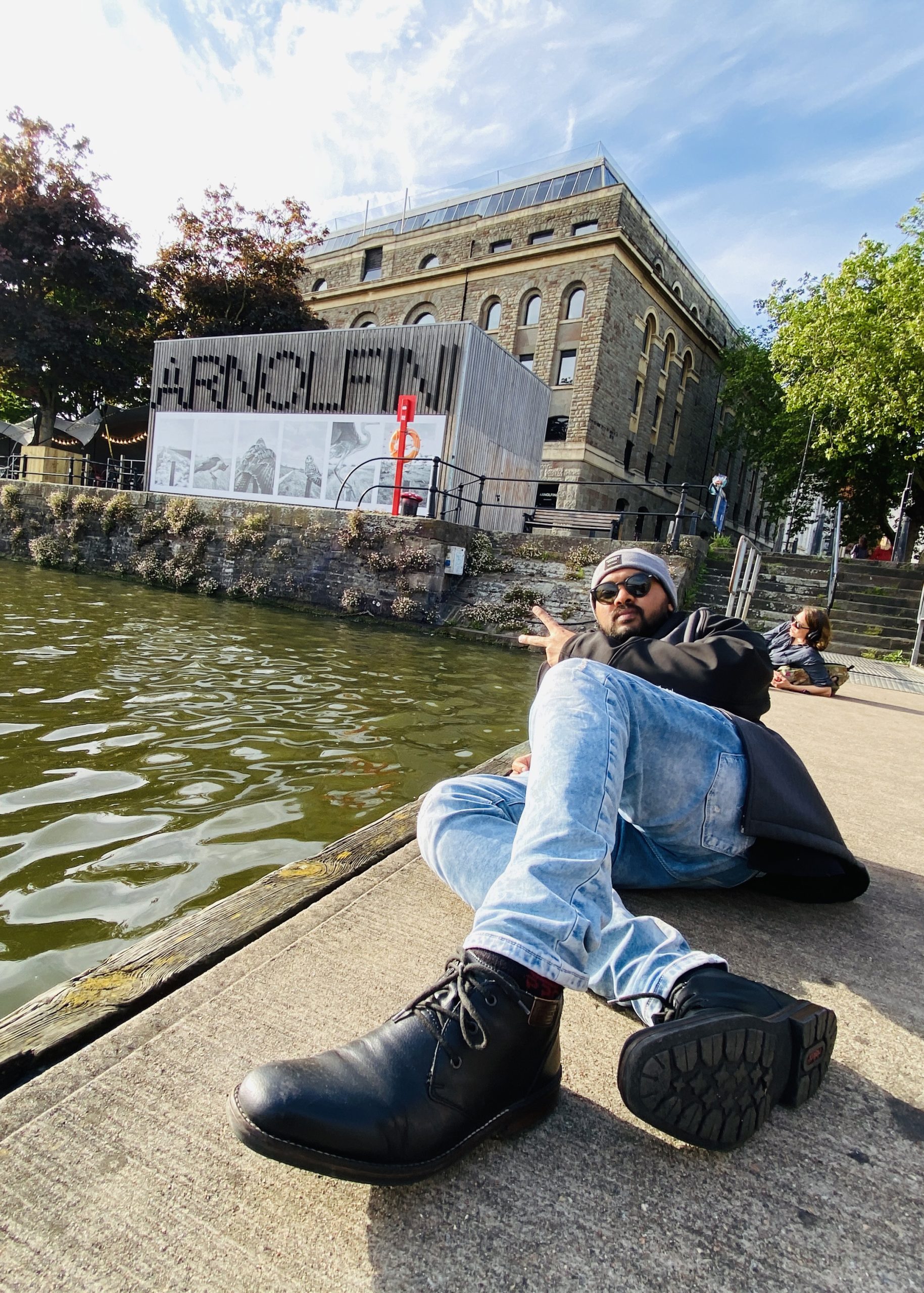
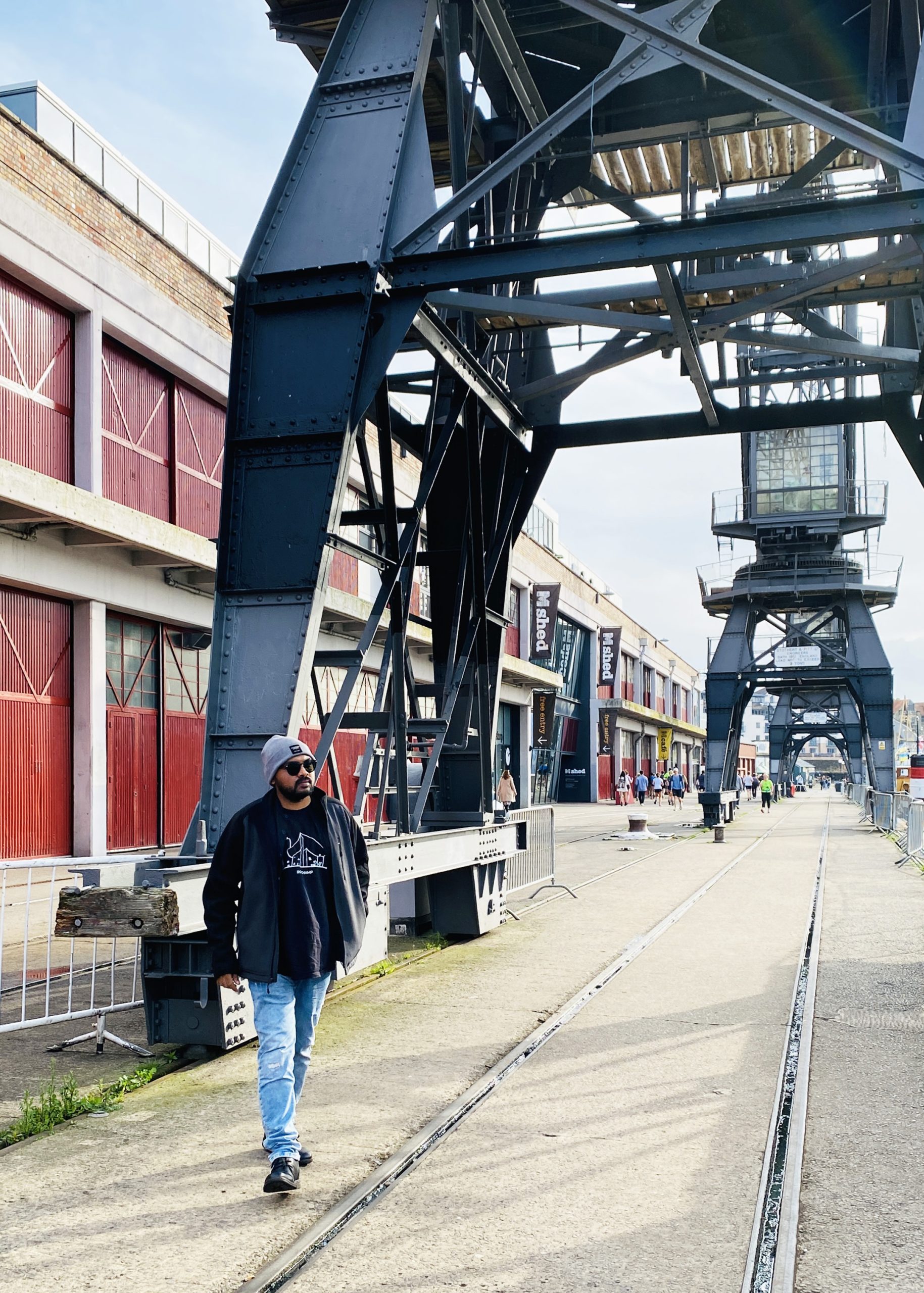
The best part about UWE itself is that it has these three different campuses in different locations around the city, each of which is very diverse. ”
While I hadn’t yet been to the UK, I’d been to numerous countries in Europe, including a summer typography workshop in Switzerland, which was an undertaking that only further inspired me along a dedicated artistic route. Even with those prior experiences under my belt, arriving in Bristol was overwhelming at first, as there was so much going on in the city! During my first six months of study, which had been online, the Programme Leader for MA Graphic Arts, Stephen Monger, had often told me that Bristol was the place to be for someone with my interests. After Covid restrictions lifted at the end of that six months, I finally got my chance to go and discovered that Steve had been exactly right—with its blend of art, design, architecture and its creativity-centric culture, Bristol was perfect for me.
The proximity to nature is one thing I love about Bristol, which is something I connect to naturally. The best part about UWE itself is that it has these three different campuses in different locationsaround the city, each of which is very diverse. I like to hop between these campuses based on whether I’m working on a project, studying or reflecting, selecting the environment that fits my current activity and mood. My classes are on the City Campus at Arnolfini, and though I originally lived quite close to it, I’ve moved to different accommodations a couple times to try out staying in different areas of the city. In general, I like to be living somewhere that’s not far from an escape into nature when I want it.
There were fifteen or so students in my Graphic Arts class, and while all of them had formerly studied integrated design, animation and illustration, I was from a more industrial educational background. Interestingly, this cross-disciplinary experience helped spark some interesting conversations and exchange between the students and a provided the chance for a lot of us to learn from one another; I was intrigued by their work and they were interested as well with how I looked at things. The way other students narrated stories and conducted problem solving were very interesting to me, and I also learned more about the relevant tools and software through them as well. In addition, Steve (Stephen Monger) was really helpful in every way, making my journey easy and helping me navigate around different departments and learning how things worked. Thanks to him, by the time I was physically in the classroom I already felt familiarized with things.
The course had a very good balance between how one thinks and reflects, and how one executes, and this latter part is where software knowledge really helps. I’ve always been curious about animationand a lover of animated movies, fascinated by how Pixar movies, for example, are able to convey stories. Stemming from this, my primary interest is in hand sketching and drawing, which is something I’ve long done, experimenting with creating animated and stop motion pieces. Animation was one of the components of my class, so I got to explore this further. Keeping an open mind, as a designer I choose any tool that I need in order to tell a story.
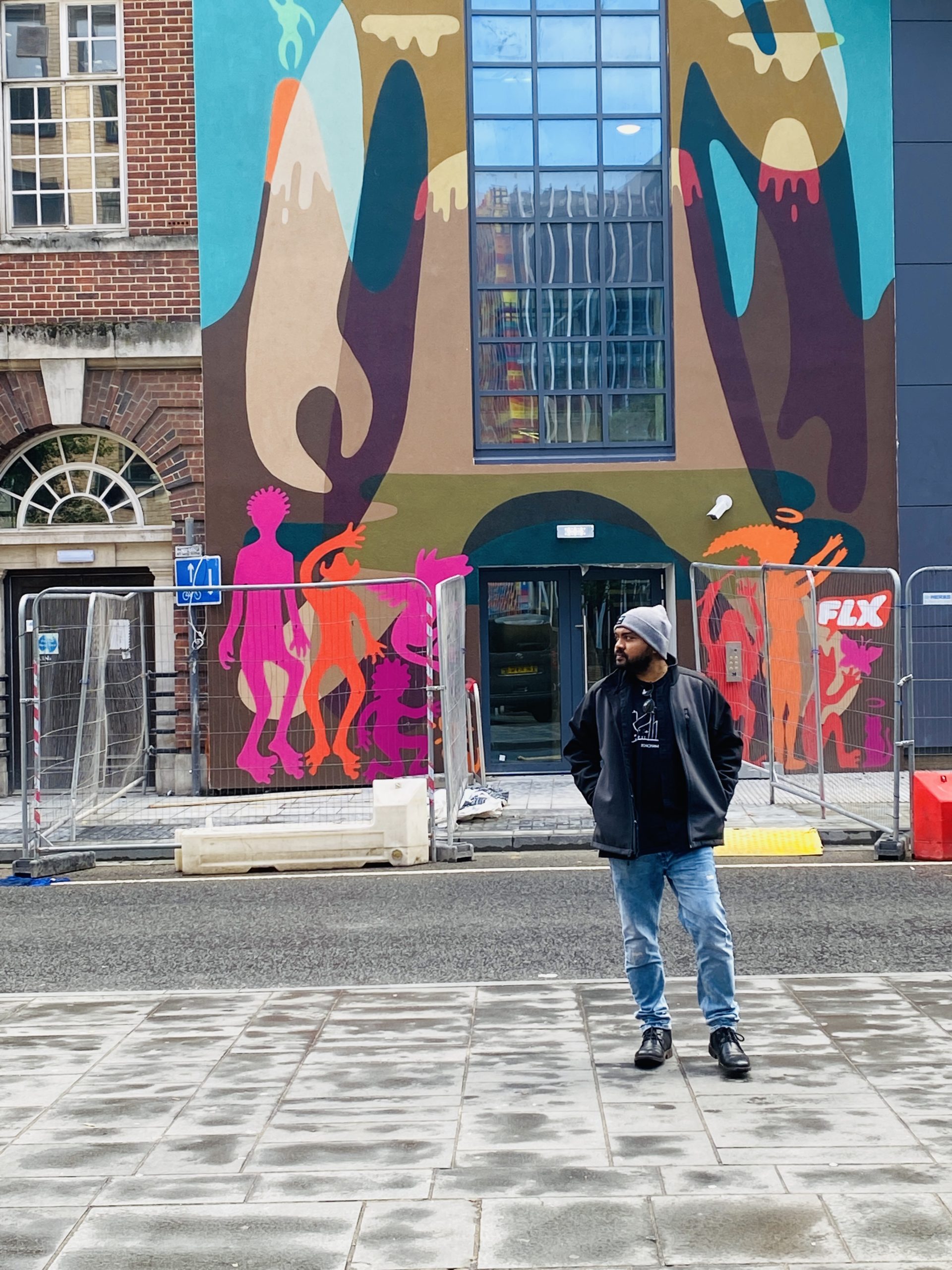
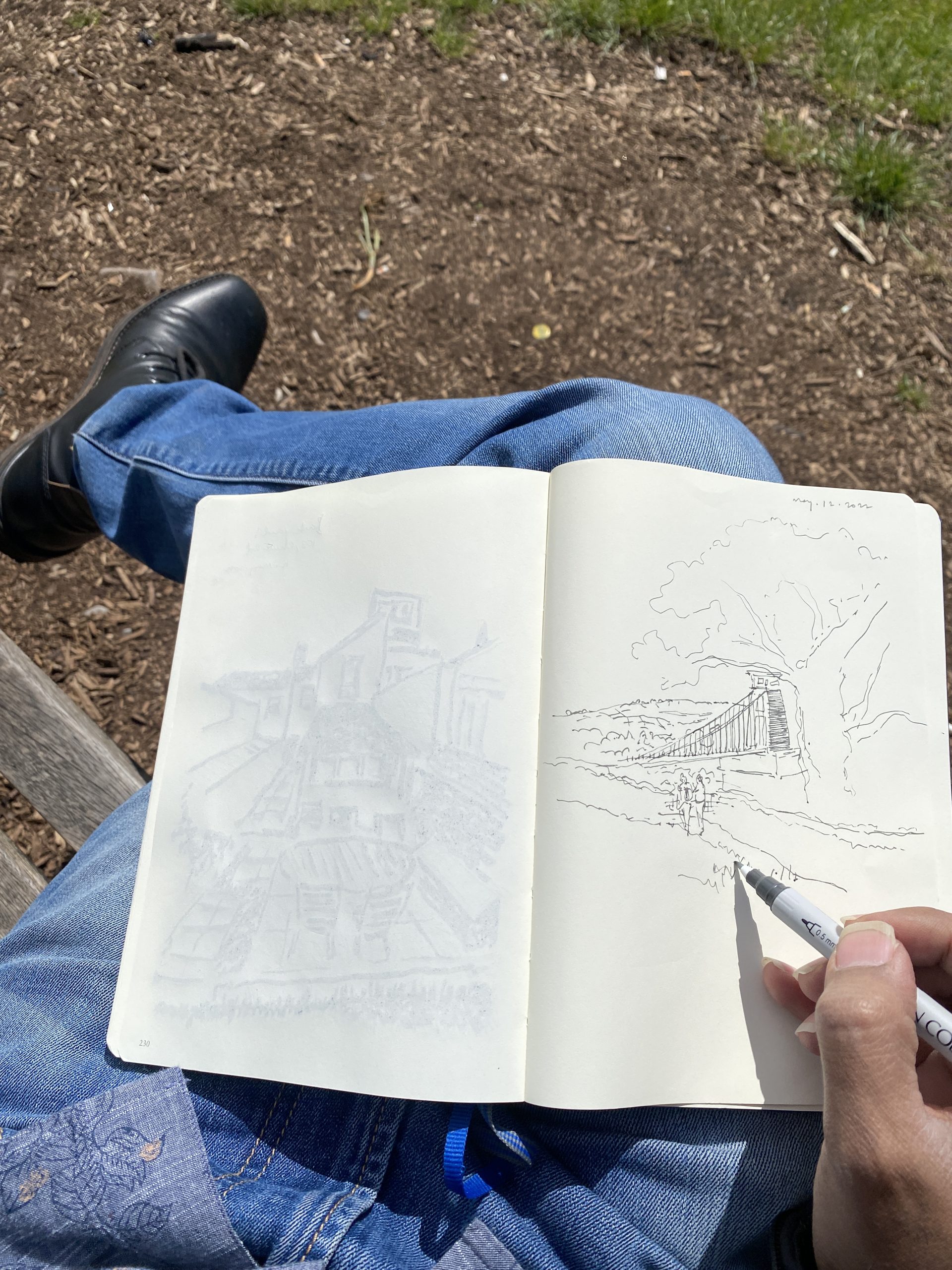
I have an analytical way of thinking and applying methodology on the one hand, while on the other I have my artistic side that I want to be able to factor in when required. ”
My final project was heavily research based, so I had to spend a good amount of time understanding certain cultural aspects before incorporating concepts into a narrative to convey them, and then came the experimentation using different tools and software. The idea arose from my observations of the local culture around me in Bristol. For instance, when I first went to a supermarket here I was intrigued by the graphic nature of different consumer products and their packaging design. The cultural influence on these different styles was apparent to me, and I became intrigued with what other people’s perceptions would be in this regard: how would Westerners perceive Indian objects, I wondered, and would they differentiate between Western and Indian designs? I proceeded by looking next at my own culture, which is so diverse and rich in art, and I came to feel that there is a lot to understand about the way we think and create, which led me to take cultural research as a starting point. I began to ask myself how we could bring back such visual cultural aspects into societal conversation and inspire a change in the way we see things. Why should packaging look like it does, for example, rather than there be a story found in the packaging, like how Indian temples are constructed and decorated to narrate a story as you move through the space? There are so many aspects of my own culture that could be brought to aspects of communication like product packaging. I didn’t know where the project would lead me at the time I started, but I discovered a lot along the way, which eventually led to visual outputs as the fruits of my research.